
Face Wash vs Cleanser | Key Differences You Must Know in 2026
Learn the difference between face wash and cleanser, how they work, who should use each, and which option is better for your skin type.
Face wash and cleanser are usually taken interchangeably, but they are not identical. The two are meant to clean the skin, but differ in their mechanism, and hence meet the needs of various skins. When the wrong one is used it may result in drying, breakouts or irritation. This will make you understand the difference between face wash and cleanser and pick the right product and create a skincare regimen that actually works towards healthy skin.
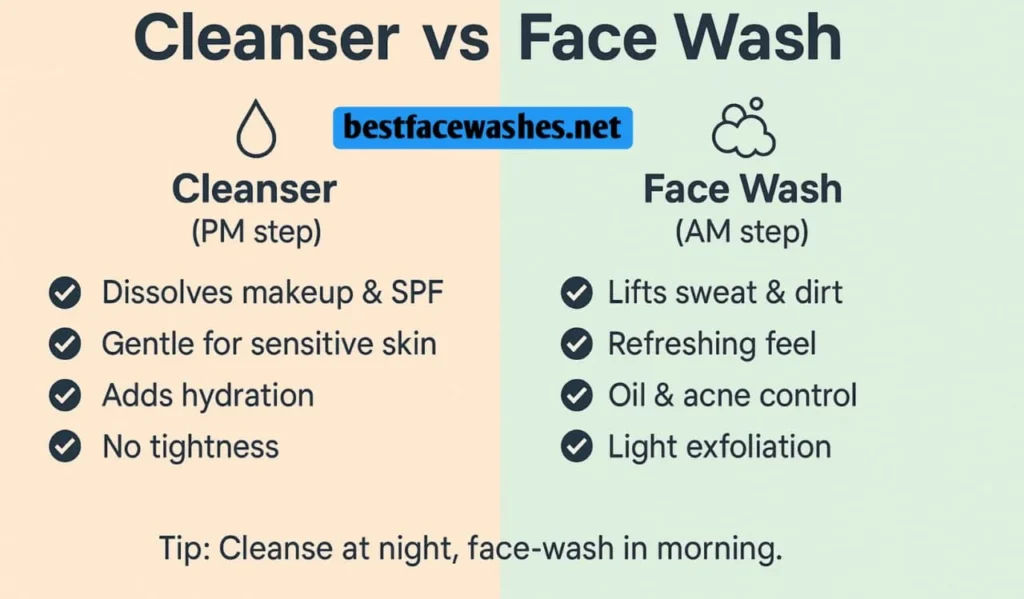
Numerous skin issues start with the confusion during the cleansing stage. This is because some individuals require thorough cleaning, whereas others require mild scrubbing off of dirt. By understanding the difference in face wash and cleanser, in terms of texture, strength and use, you can then pair a product with your skin. This knowledge will eliminate errors and enhance skin comfort and balance in the long term.
What Is a Face Wash
A face wash is made in a way that it deep cleanses the skin and gets rid of the excess oils, dirt, sweat and bacteria that are trapped in the pores. It is normally foaming or gel based and is effective in oily and acne-prone skin. Face washes are a more intense source of cleanliness, and they promote keeping the pores open and lessening the breakouts in case they are properly taken as a part of a daily routine.
Explore The Best Face Washes According to Your Skin
Face washes are better since they are more thorough, however, sometimes they become drying in case they are overused, or with a strong formula. They suit individuals who are more productive in terms of oil production or those who are in the humid climate. A face wash can be a good option in cleansing when used correctly to avoid skin barrier damage and is thus an excellent choice in everyday cleansing.
What Is a Cleanser
A cleanser is less harsh and is targeted at the surface dirt, light makeup, sunscreen and other impurities but does not strip the skin. It is usually cream, lotion or milky in nature and it suits the dry, sensitive or compromised skin. Cleaners retain moisture and clean at the same time so it is appropriate to those who feel tight or irritated when washing their skin.
Cleansers do not normally foam aggressively as opposed to face washes. They are mild in nature and help to support the skin barrier and minimize the chances of reddening or drying. Cleansers are also usually applied in minimum or barrier-repair regimens whereby hydration is given more concern as compared to deep oil removal. Their cleansing is comfortable without stressing out the skin.
Difference in Cleansing Strength
The cleansing power is the primary variation between the face wash and cleanser. Face washes are stiffer and go deeper into pores and get the oil and the rubbish off more aggressively. This causes them to work well on the oily skin but could be rough on the dry or sensitive skin. Instead, cleansers are aimed at soft surface cleaning and preservation of moisture.
Due to this dissimilarity, it can be experienced that a face wash on dry skin can tighten more, whereas on very oily skin, a cleanser can become inadequate. The selection of cleansing power will make sure that your skin is not over-cleaned and irritated. Increasing the strength of the products to the needs of the skin enhances comfort and health of the skin in the long run.
Difference Based on Skin Type Needs
The use of skin type is also a major determinant of which face wash or cleanser is most appropriate. Acne prone and oily skin normally responds well to face washes which regulate oils and desilt pores. Extremely dry, sensitive, or aging skin is usually better in elastic cleansers that eliminate the dirt without causing any harm to the skin or skin tone but promote hydration and barrier reconstruction during use.
The combination skin can be used to alternate both products based on the season or the state of the skin. Knowing the support that each product has on various skin needs, you will not over-clean or under-clean. The right choice enhances balance in your skin, decreases irritation and enables all of your other skincare steps to work even more successfully.
Texture and Formulation Differences
Face washes are typically in gel or foam forms and they are meant to cleanse the pores deep and get rid of excess oil. These are refreshing textures which can be drying to certain types of skin. Cleansers tend to be cream, lotion, or milky and are concentrated on mild cleansing. They are hydrating and comfortable, and consistent with their formulation, they are recommended in the skin, which is easily reactive or experiences tightness after a wash.
Explore The Best Ingredient-Based Face Washes
The feel of the skin depends on the texture that gives the skin that feels now that it has been cleansed. Foaming face washes give a squeaky-clean feeling, which will be appreciated by oily skin. Soft, moisturizing and prevent loss of water, creamy cleansers have a soft touch. A wise selection of texture will enhance the comfort of the cleansing process as well as minimize the chances of irritation or disproportion in the daily skincare process.
Morning vs Night Usage Comparison
Face washes are usually taken at night since it cleanses sunscreen, oil as well as pollution that has been gathered throughout the day. Their more thorough cleaning effect makes them keep the pores clean before going to sleep. Many skin types may do well with a cleanser in the morning, particularly the dry or sensitive skin, since this method does not deprive the skin of important oils.

Washing in the morning is hydrating and it prepares the skin to take in the sunscreen and makeup. Night time cleansing can be useful to clean the skin completely. The variation of the usage depending on the time of the day assists in maintaining the balance and avoids over-cleansing of the skin that may weaken the skin barrier and lose its strength over time.
Can You Use Both in One Routine
There are occasions when it is advantageous to have a cleanser and a face wash in some skincare routine, particularly in a case of double cleansing. The first one is a cleanser that can be used to remove the makeup or the sunscreen and then the second is a face wash, which cleanses the pores further. It is a good technique used on oily or acneic skin that uses heavy make-up or frequently experiences pollution.
Nonetheless, the combination of the two might not be applicable to all. Cleopatra may irritate the dry or sensitive skin with twice cleansing. The decision of the use of one or both is dependent on the skin type, the environment and the strength of the product. To maintain the natural protection of skin, balance is necessary to ensure that it is not damaged.
Which Is Better for Long-Term Skin Health
Cleanser and face wash are not equally good and the correct option depends on the needs of the skin. Cleansers promote long term barrier health and moisture hence are best used on sensitive or dry skin. Face washes aid in controlling oily and breakouts but only when used well and not in excess.
A long-term skin is the result of soothing washing, not intensive exercises. It is better than taking up the trends and more important to select the product that will leave your skin comfortable, calm, and balanced. Cleansing strength with skin type match is a guarantee of healthy skin in the long run.
FAQs
Conclusion
The distinction between face wash and cleanser is that of strength of cleansing, texture and suitability of the skin. Face washes provide greater cleansing of oils and pores whereas cleansers are aimed at mildly cleansing impurities and skin hydration. Knowing these differences avoids product dryness, irritations, and breakouts due to the incompatibility of products.
The selection of the option is determined by the skin type, lifestyle and the environment. Face wash and cleanser can both be helpful in taking care of healthy skin when properly utilized. Balance and consistency, as well as listening to your skin in the long run is the key.